Fundamentals of Research: An Advanced and Comprehensive Module for ETEEAP Professionals
This enhanced module provides an in-depth, competency-based exploration of academic and applied research. Tailored for working professionals in the Expanded Tertiary Education Equivalency and Accreditation Program (ETEEAP), it expands on foundational concepts to provide highly detailed, actionable methodologies. This comprehensive guide will empower you to design, execute, and report research that drives evidence-based improvements in your respective industries.Fundamentals of Research: An Advanced and Comprehensive Module for ETEEAP Professionals
This enhanced and comprehensive module on Fundamentals of Research is specifically designed for professionals enrolled in the Expanded Tertiary Education Equivalency and Accreditation Program (ETEEAP). Recognizing the extensive industry experience, practical expertise, and professional competencies of adult learners, this module bridges real-world workplace practices with rigorous academic research standards. It provides learners with an advanced, competency-based foundation in research principles, methodologies, analytical techniques, and scholarly writing necessary for professional, organizational, and academic development.
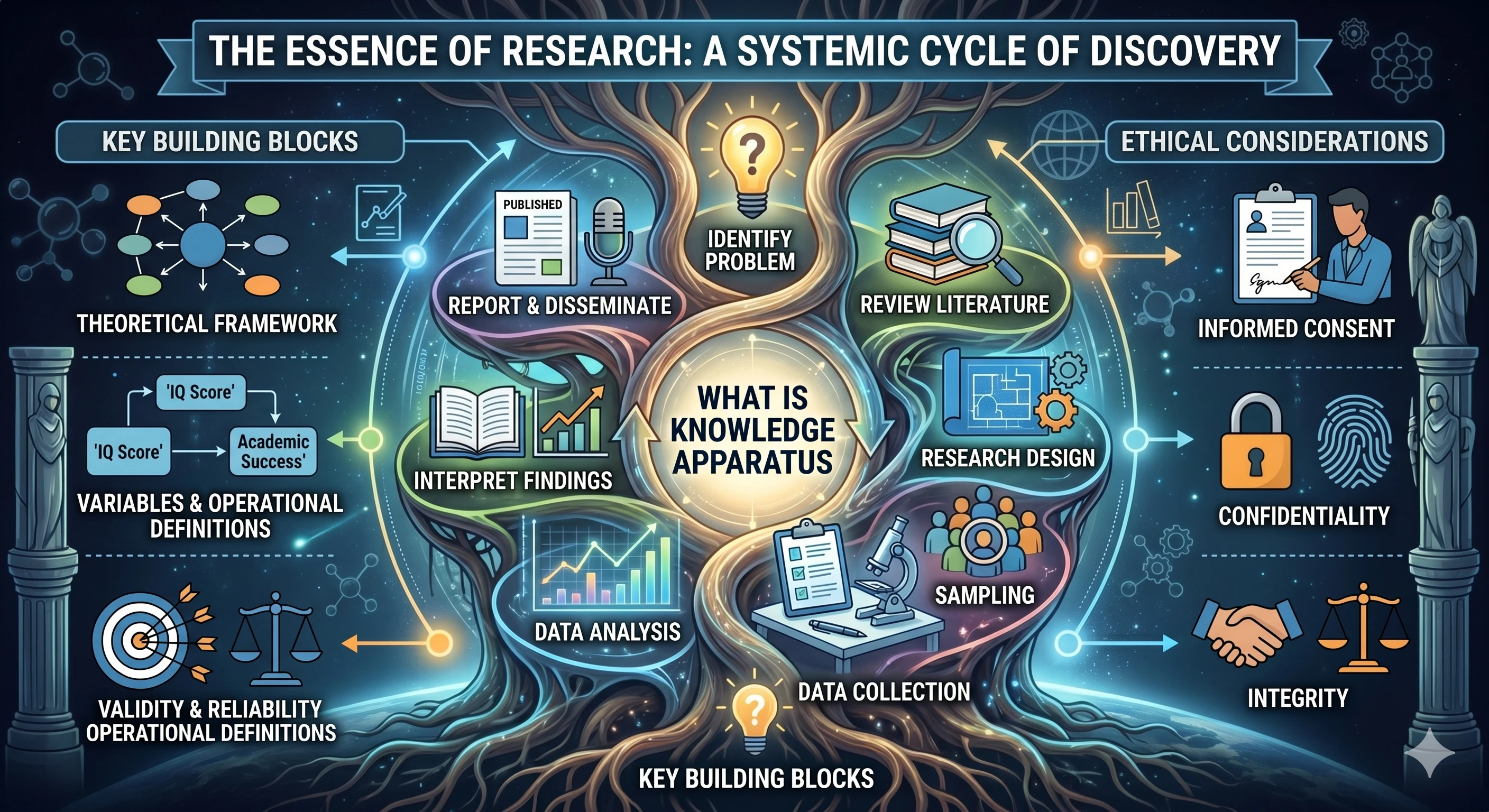
The module offers an in-depth exploration of the entire research process—from identifying practical and industry-relevant problems to developing conceptual frameworks, selecting appropriate methodologies, gathering and analyzing data, interpreting findings, and presenting evidence-based conclusions and recommendations. It emphasizes the importance of research as a tool for innovation, strategic decision-making, policy development, quality improvement, organizational efficiency, and professional advancement across various disciplines and industries.
Designed for working professionals with diverse occupational backgrounds, this module integrates theoretical knowledge with practical applications. Learners will examine both qualitative and quantitative approaches to research, including mixed-methods strategies, enabling them to address complex workplace and societal challenges systematically and scientifically. Special emphasis is placed on applied research, action research, program evaluation, and industry-based investigations that generate measurable and meaningful outcomes within professional settings.
The module further develops advanced competencies in problem identification, formulation of research objectives and questions, hypothesis development, literature review synthesis, research design selection, sampling procedures, instrument development, data collection techniques, statistical treatment, thematic analysis, interpretation of results, and ethical considerations in research conduct. Learners will also gain proficiency in academic writing, citation and referencing styles, plagiarism prevention, and the preparation of professional research reports aligned with institutional and international scholarly standards.
In addition, this module highlights the role of technology and digital tools in modern research practices, including online databases, electronic journals, research management software, statistical applications, and data visualization platforms. It encourages critical thinking, analytical reasoning, evidence-based problem solving, and reflective professional practice, enabling learners to become competent practitioner-researchers capable of contributing valuable insights to their respective organizations and communities.
By the end of this module, ETEEAP professionals will possess the knowledge, skills, and competencies necessary to conceptualize, design, implement, evaluate, and communicate high-quality research projects that support continuous improvement, innovation, and sustainable development in their fields of specialization. This module ultimately prepares learners to become effective research-oriented professionals who can apply scientific inquiry to address contemporary issues, improve workplace systems, and contribute to the advancement of knowledge and professional practice.